Creators are turning product demos into storefronts, and shoppable video now drives a quarter of ecommerce in Southeast Asia. Here is how social and live commerce work and how brands can join in.
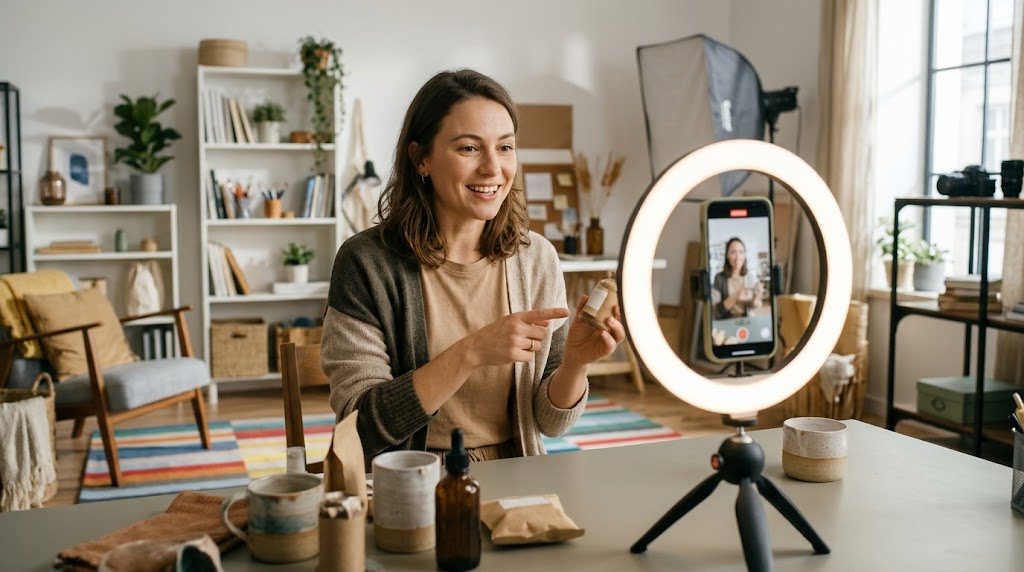
The most influential storefront in online retail may not be a website at all. It is a creator holding a product up to the camera, explaining why it works and inviting viewers to buy with a tap.
Social and live commerce turn entertainment into discovery and discovery into sales. Shoppable video now accounts for a meaningful share of ecommerce in fast-growing markets, and platforms such as YouTube are building tools that make every product mention a potential path to purchase.
Why video sells
Video answers the questions a product photo cannot. How does the fabric move? How big is the bag on a real person? How long does the gadget take to set up? A creator who has used the product for a week can answer all of that in two minutes.
Trust is the other half of the story. Viewers follow creators because they like their taste and their honesty. When that creator recommends something, it lands as advice from someone familiar rather than an advertisement. That is why shoppable video tends to convert curiosity into action.
The scale is already significant. In November 2025, the e-Conomy SEA report from Google, Temasek and Bain & Company found that video commerce makes up roughly 25% of ecommerce GMV in Southeast Asia, a region where ecommerce GMV reached $185 billion.
YouTube Shopping turns creators into storefronts
YouTube has built a full shopping layer around its creators. Through the YouTube Shopping affiliate program, creators tag products in their videos and earn a commission when viewers buy. In August 2024, YouTube expanded its partnership with Shopify so that all eligible Shopify Plus and Advanced merchants in the United States could join, giving creators access to thousands of new brands to feature.
India: shopping watch time more than tripled
India shows how quickly this can grow. In October 2025, YouTube reported that more than 200 million logged-in users in India ran shopping-related searches on YouTube in July 2025. Shopping-related watch time grew more than 250% year over year between February 2024 and February 2025.
Creators have embraced the program. More than 40% of eligible creators in India had enrolled by June 2025, and more than 3 million videos had been tagged with affiliate products by May 2025. Beauty leaders Nykaa and Purplle joined as merchant partners in 2025.
Viewers like the format, too. In a survey cited by YouTube, 85% of Indian viewers said creator brand collaborations feel authentic on the platform, and 89% of beauty shoppers said YouTube helps them make more confident purchase decisions.
Southeast Asia: creators sign up fast
The audience in Southeast Asia is enormous. The Manila Bulletin reported in June 2025 that YouTube reached 290 million people in the region in 2024, about 85% of its online population. Trust runs high as well: a Kantar study cited in the same report found that 85% of viewers in Thailand and 67% in Indonesia consider YouTube creator content trustworthy.
YouTube Shopping launched in Southeast Asia in partnership with Shopee, covering Indonesia, Thailand, Vietnam, Singapore, Malaysia and the Philippines. According to YouTube data reported by the Manila Bulletin in June 2025, an average of 55% of eligible creators enrolled in the first three markets: Indonesia, Vietnam and Thailand.
The results show up in creator income. One Indonesian tech channel, Jagat Review, earned half of its total channel earnings from the program between July and October 2024. In Vietnam, the number of channels earning nine-figure sums in local currency in December 2024 rose 35% year over year.
New tools make every mention shoppable
The next wave of features uses AI to remove friction for creators and viewers alike. In October 2025, YouTube announced several updates:
- Automatic product tags: an AI-powered system that displays a product tag at the exact moment the product is mentioned in a video.
- Broader auto-tagging: tests to identify and tag every eligible product mentioned in a video.
- Flexible brand segments: a format that lets creators insert and refresh sponsored segments in their videos.
- Links in Shorts: creators using Shorts for brand deals can add a link straight to the brand's website.
- Creator Partnerships Hub: a tool in Google Ads that helps brands find the right creators to work with.
Shopping is also moving to the biggest screen in the house. YouTube has introduced shoppable formats for connected TVs, so a viewer watching on the living room television can still act on what they see.
What makes a great shoppable video
The videos that sell best rarely feel like sales pitches. They share a few traits that brands can encourage in every collaboration:
- Real use: the creator shows the product doing its job in everyday life.
- Clear answers: sizing, setup time and who the product suits are covered plainly.
- Personality: the creator's own humor and opinions come through.
- An easy next step: the product tag or link appears right when interest peaks.
Short and long formats each have a role. Short clips spark interest quickly, while longer reviews and tutorials help shoppers who are ready to compare details before buying.
Live commerce brings the store to the stream
Live shopping adds real-time energy. A host demonstrates products, answers questions from the chat and announces limited drops as they happen. It recreates the best parts of an in-store visit: expert help, a sense of occasion and the chance to ask "will this work for me?"
Live formats also suit product launches and seasonal moments. A brand can gather an audience at a set time, show a new collection piece by piece and let viewers shop while the excitement is high.
For brands, live sessions are also a source of insight. The questions viewers ask in the chat reveal what matters to them, and those answers can improve product pages, FAQs and future content.
How brands can get started
Social commerce rewards brands that treat creators as partners rather than billboards. A few principles help:
- Choose fit over follower count. A creator whose audience genuinely cares about your category often outperforms a larger general channel.
- Give creators room. Their own voice is what earns trust, so share product knowledge and let them tell the story.
- Make products easy to tag. Joining affiliate programs through your ecommerce platform puts your catalog in front of creators.
- Repurpose great content. A strong creator video can become a product page asset, an ad and a social post.
- Listen to the comments. Viewer questions are free research on what shoppers want to know.
Putting creators at the heart of your storefront
Shoppable video is becoming one of the main ways people discover products, especially in fast-growing markets such as India and Southeast Asia. The tools to take part are increasingly built into the platforms brands already use, which makes the first step a small one.
This month, identify three creators whose audiences match your best customers and look at how they present products today. Then make sure your catalog is eligible for the affiliate programs they use. A single well-matched collaboration can introduce your brand to an audience that already trusts the person recommending it.
Sources
- Google India Blog: "Fueling the next era of creator-led shopping experiences in India," October 10, 2025.
- Manila Bulletin: "How YouTube is powering Southeast Asia's video shopping boom," June 11, 2025.
- TechCrunch: YouTube expands Shopify partnership for the YouTube Shopping affiliate program, August 20, 2024.
- Bain & Company press release: "e-Conomy SEA 2025," November 11, 2025.